How Mobile IV Therapy Works
Somebody comes to you with everything needed, screens you, places a line, and stays until it is done. That is the service.
This page covers what happens at each step and what we need from you to make it run on time.
Booking
Online or by call and text, at any hour. Between 9:00 PM and 6:00 AM, call rather than booking online so timing can be confirmed directly.
Give us the full address, the unit or room number, any gate or building code, and where to park. Access details are the single most common reason a visit runs late.
If you are unsure which drip you want, describe what is going on instead. It is a faster conversation than reading a menu.
The Health Review
This happens before we arrive rather than on your doorstep. History, medications and supplements, allergies, and anything that has gone wrong with an IV before.
Anything requiring provider review gets it in advance. That is why saying at booking that nausea is the problem saves everybody time later.
Each person completes their own review, including at a group booking. Nobody can complete it on somebody else’s behalf.
The Visit
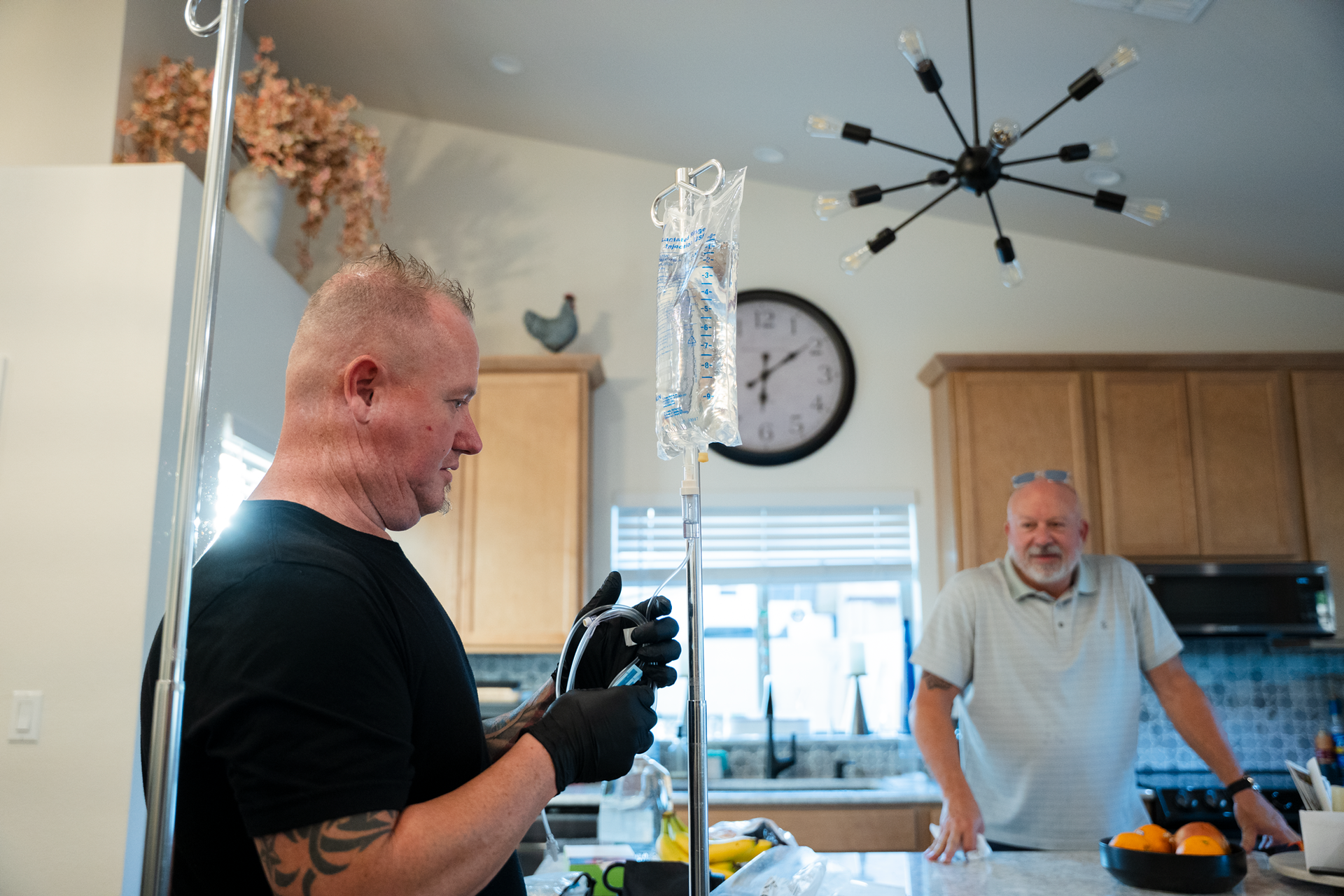
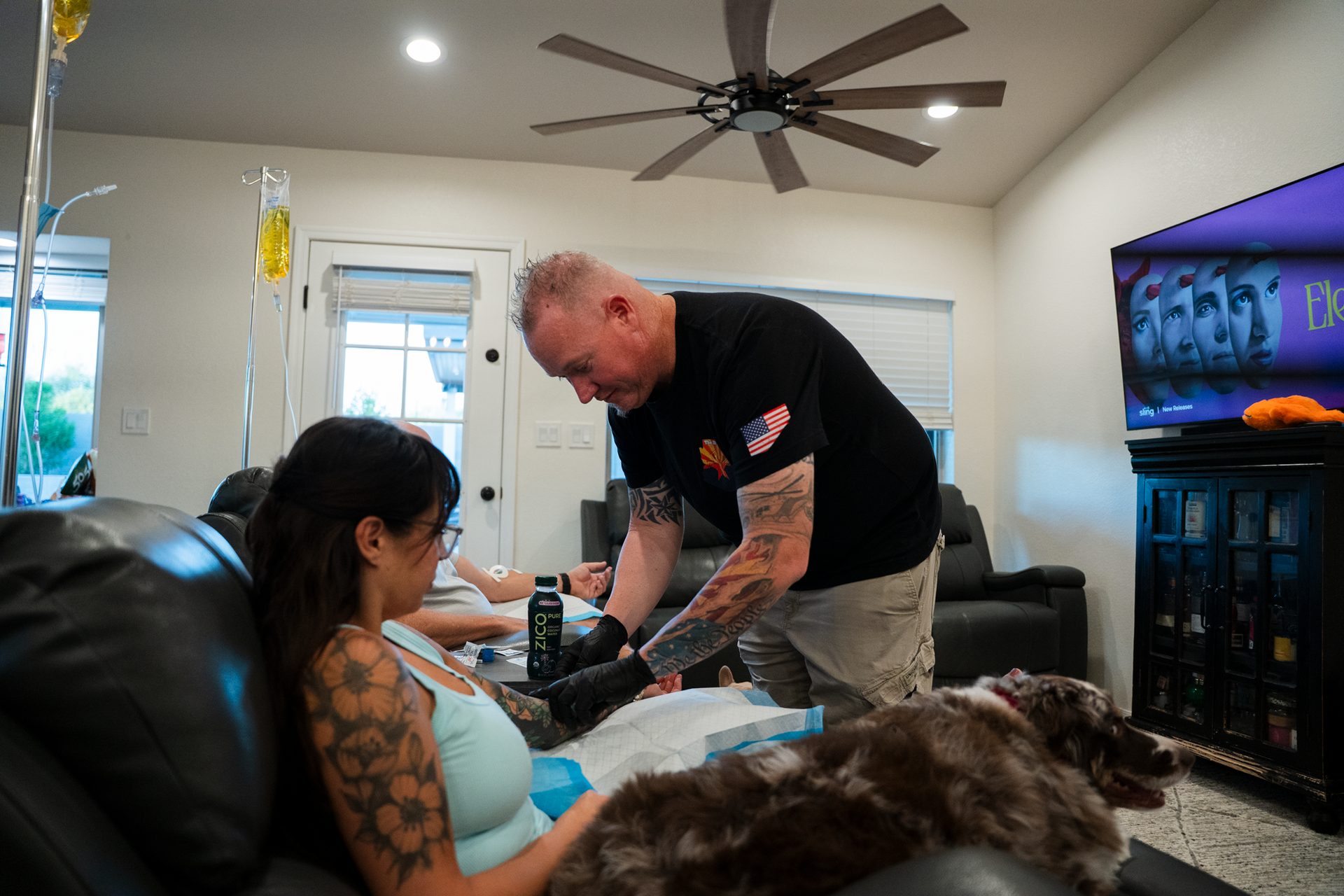
Everything arrives with whoever is treating you. There is nothing to set up and nothing to buy beforehand.
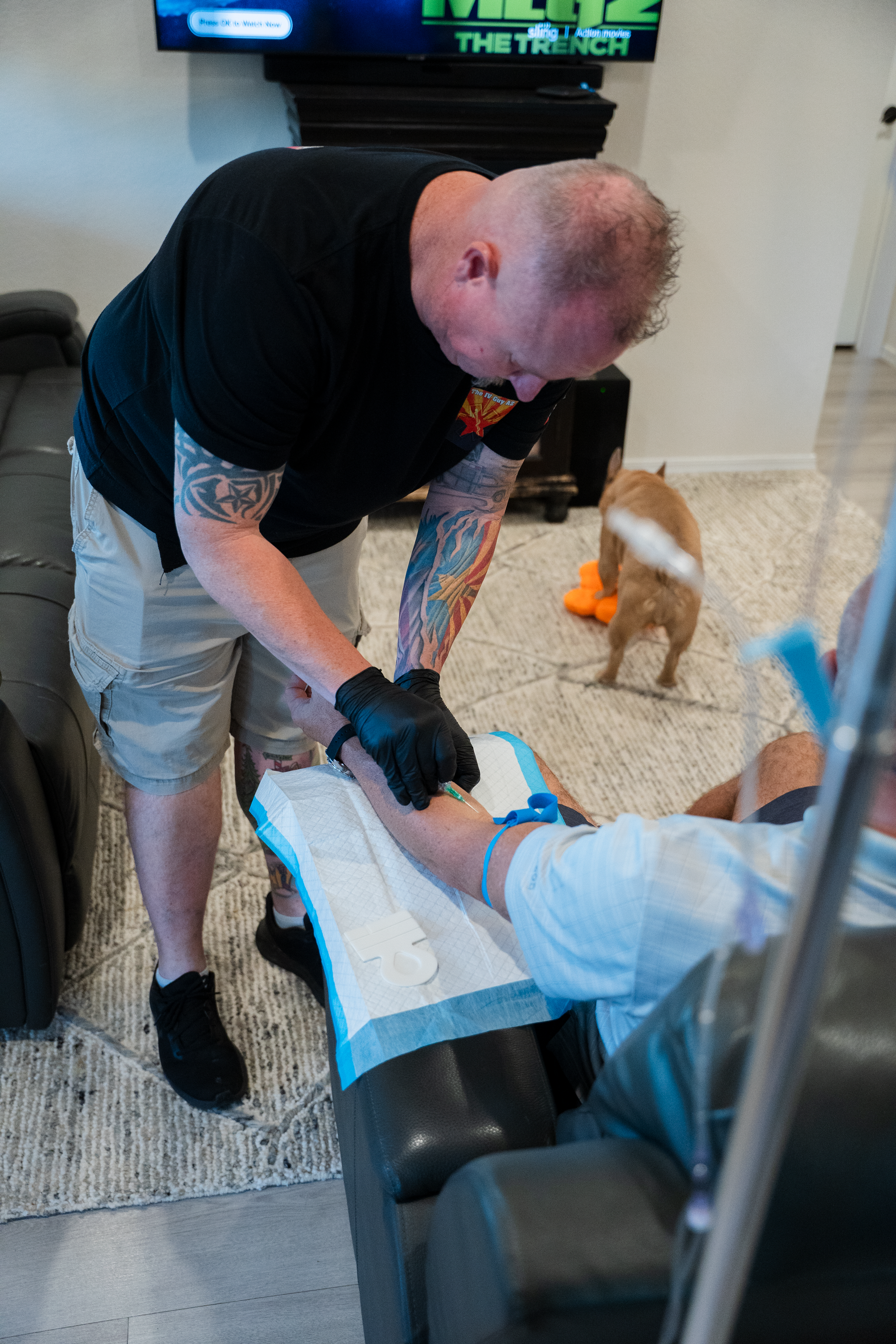
They confirm the review in person, answer questions, and place the line. Most drips run 30 to 45 minutes, and NAD+ runs longer because it has to go in slowly.
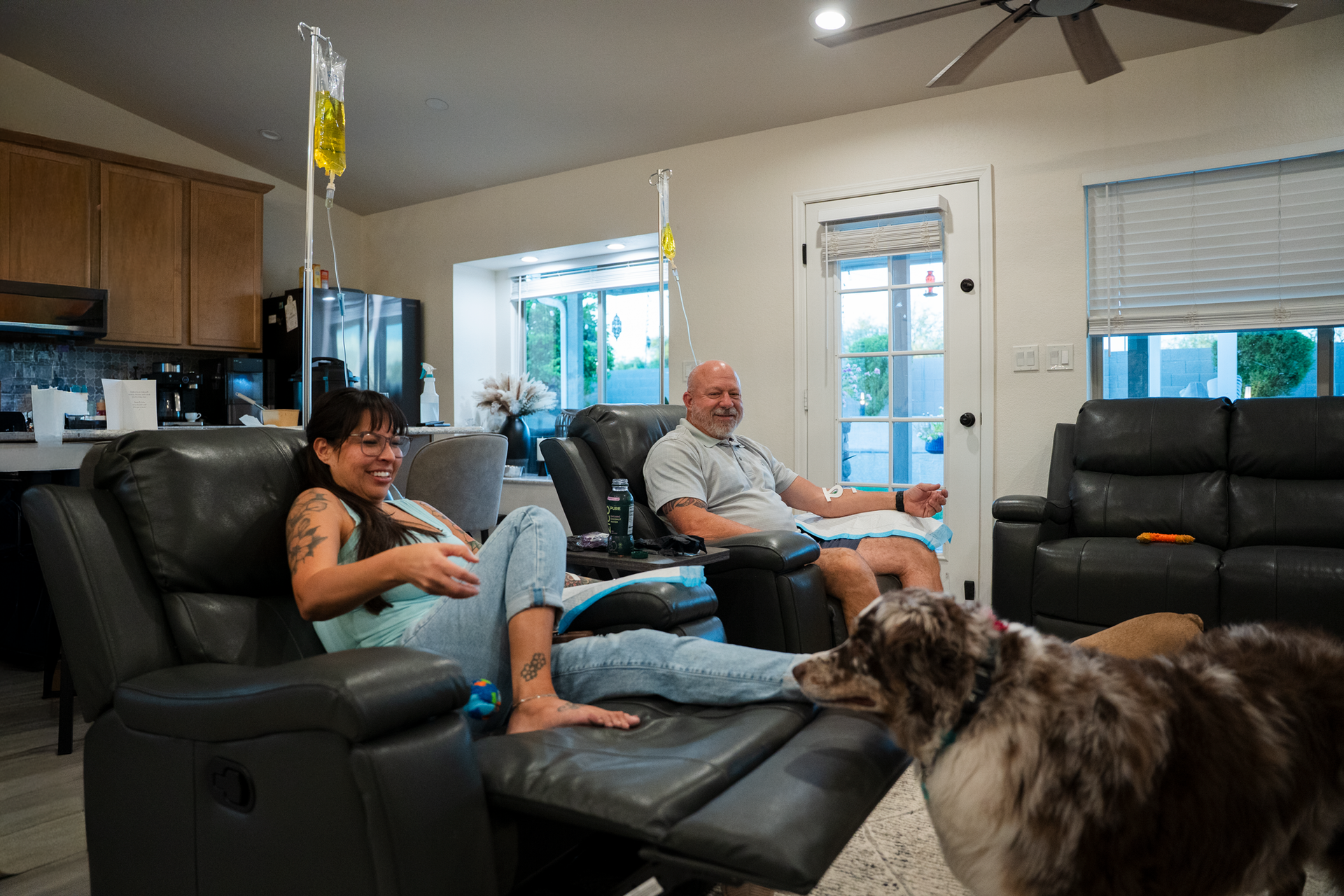
You will want somewhere comfortable to sit or lie down with one arm free. A couch, a recliner, a bed, or an office chair all work.
Where It Can and Cannot Happen
Homes, apartments, hotels, resorts, rentals, offices, gyms, job sites, campsites, and RVs all work.
What does not work is full sun with no shade, a moving vehicle, or anywhere you cannot be properly watched. A boat is fine if it is docked and staying docked.
If the setting is not suitable, whoever arrives will say so rather than proceeding. That is part of doing this properly.
What to Ask Before You Book Anybody
Who is placing the line and what is their license or certification. Who is the medical director and are they a physician. Does somebody stay for the whole infusion.
What happens if you decide I should not be treated, and am I charged. What is the total price including any call-out or travel fee. And what happens if I react to something.
Those six questions separate the companies worth using from the ones that are not, and any company that finds them awkward has told you something useful.
Arizona Makes This Different
Most of what gets written about IV therapy assumes a temperate climate. Here, dehydration is not an occasional event, it is a background condition for four or five months of the year.
Thirst arrives late, humidity in monsoon season makes sweating less effective, and people who work outdoors carry a deficit that builds across a season rather than a day. That changes who needs this and how often.
The Short Version
If you take one thing from this page, take this. An IV is a useful tool for hydration and nutrient delivery, it is not medicine for a diagnosed condition, and the company giving it to you should be willing to tell you both of those things.
Anyone promising more than that is describing a product rather than a procedure, and in a state this hot there is more than enough honest demand without overselling it.
How We Do It
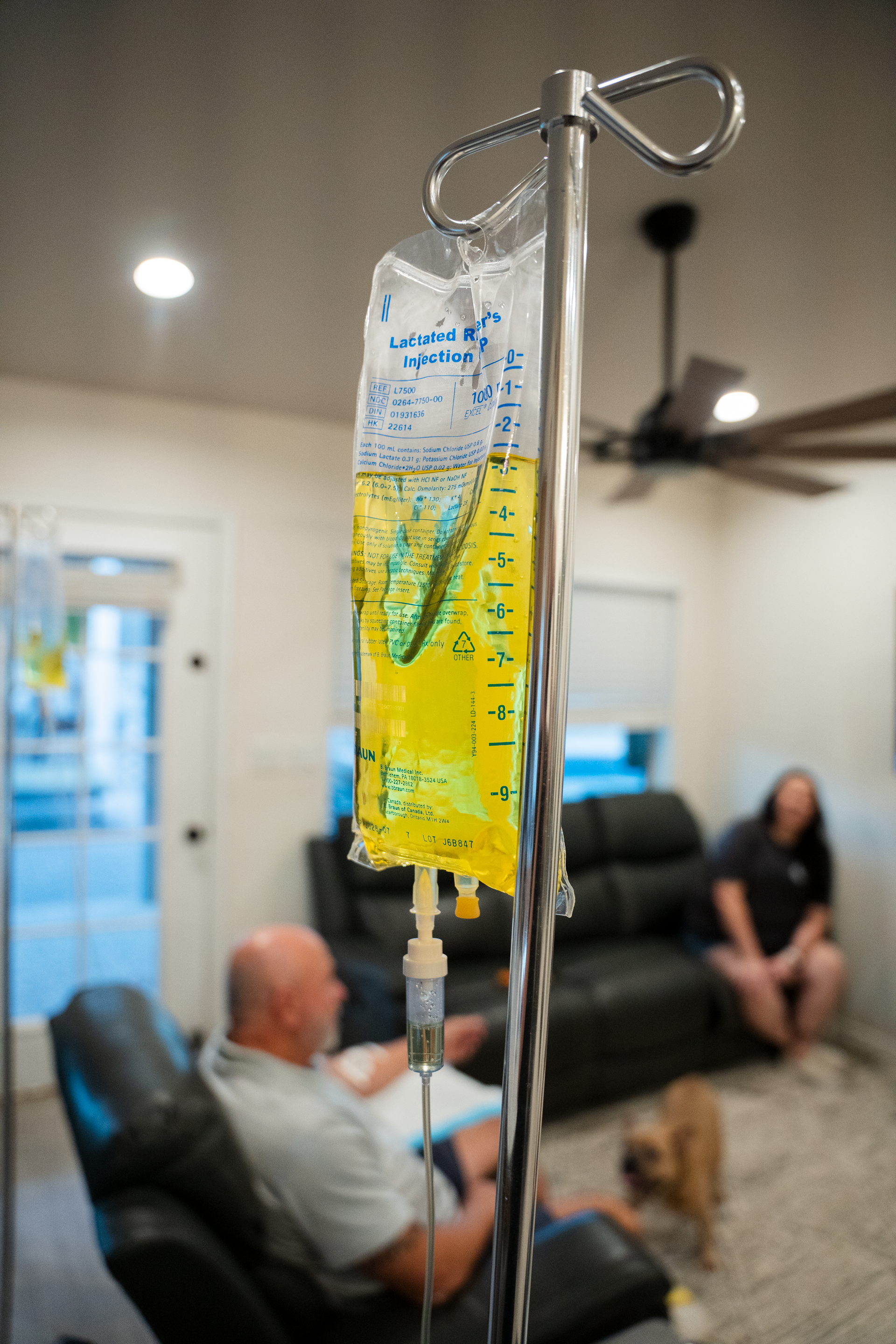
The IV Guy AZ runs 24 hours a day across 22 cities in the Phoenix metro and West Valley. Paramedics and nurses, working under the medical direction of an emergency medicine trained physician, with no call-out charge anywhere in the service area.